
Handknit socks are some of my very favorite things. They are warm, and comfortable, and durable. Wearing handknit socks makes my cold days bearable. I am not sure how many pairs of socks I have knit in my lifetime. I knit socks throughout the year, for my self. I also knit them for those that are truly knit-worthy, i.e. The Husband, Feebs, The Father, and the Female O. The Mother is excluded because she hates wool. It’s a struggle with that one…
I learned how to knit socks using double pointed needles (dpns). The construction was cuff-down with a heel flap and gusset. The first sock (singular) that I knit was beautifully done. My stitches were even and the sock was nice and dense. The reason for the singularity is that it was the perfect size for an 8 year old, and I was 23. Also the cuff was so tight that there wasn’t a chance that I would get it over my heel. I never bothered making a mate for it. Mind you, I still have that sock. I am still proud of that sock.
Over the years, I have knit socks with patterns, knit socks with various heels, and knit several iterations of vanilla socks. I find that while I enjoy owning pretty patterned socks (I am looking at you, Blueberry Waffles pattern), I don’t tend to reach for them when getting dressed in the morning. I wear socks from October till May, and I am a boot wearer. I need socks with a smooth fabric that will cover my leg all the way up to the boot top. I try not be the Princess and the Pea, but have you ever tried to walk around with a hard knot in the sole of your sock? Or knee high boots worn with socks that only go up to lower shin? While I do love my version of fashion, I love comfort more. So socks with lace don’t work for me, since I wear them for warmth. Socks with beautiful colorwork are nice, but I tend to knit colorwork tight, so calf comfort could be compromised. Socks with any kind of a texture can add friction and also compromise comfort.

Heels have been a journey. As stated, I began with the noble heel flap and gusset. It is so cool to watch that heel come alive. Once you finish a heel flap and gusset, you feel like an honest to goodness Knitter. I have also tried afterthought heels. Afterthought heels are seriously convenient when you just want to keep knitting a tube. I don’t always love the fit of an afterthought heel, though. I also always have holes on each side from where the stitches were picked up. I have also tried a few different short row heels and my favorite is the Fish-Lips-Kiss (FLK) heel. This heel fits my feet well and is very easy to knit. I really like the look of it, and have found that if I add a stitch to each side of the heel, then knit it together on the next row, I don’t end up with a hole on each side.
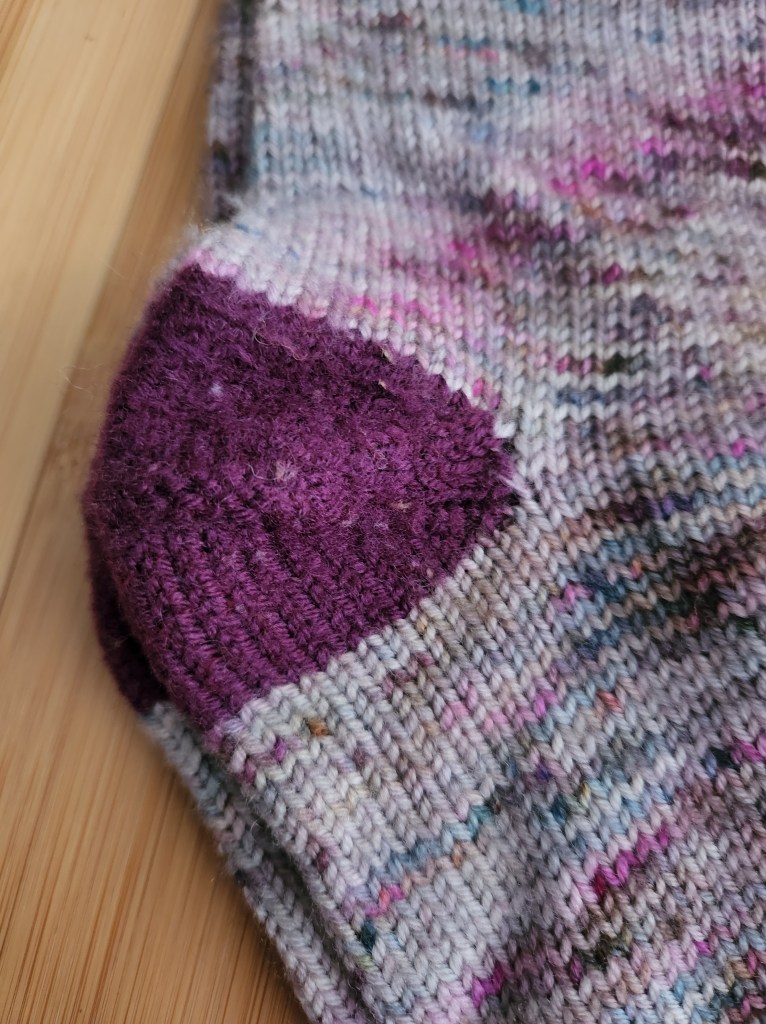
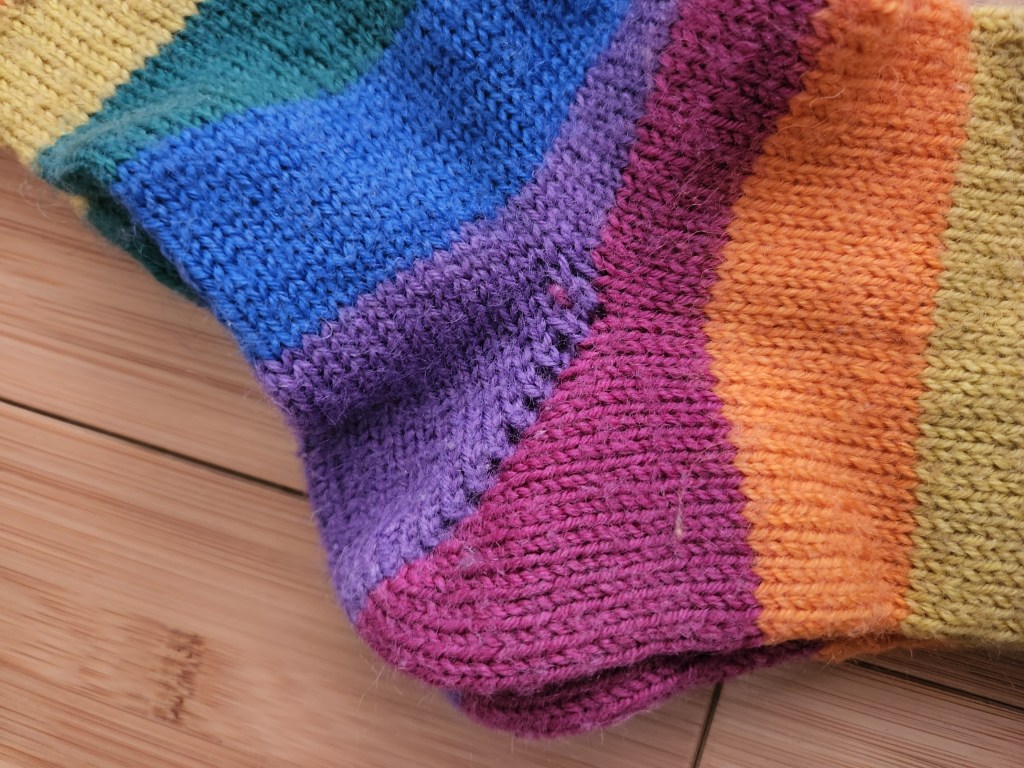
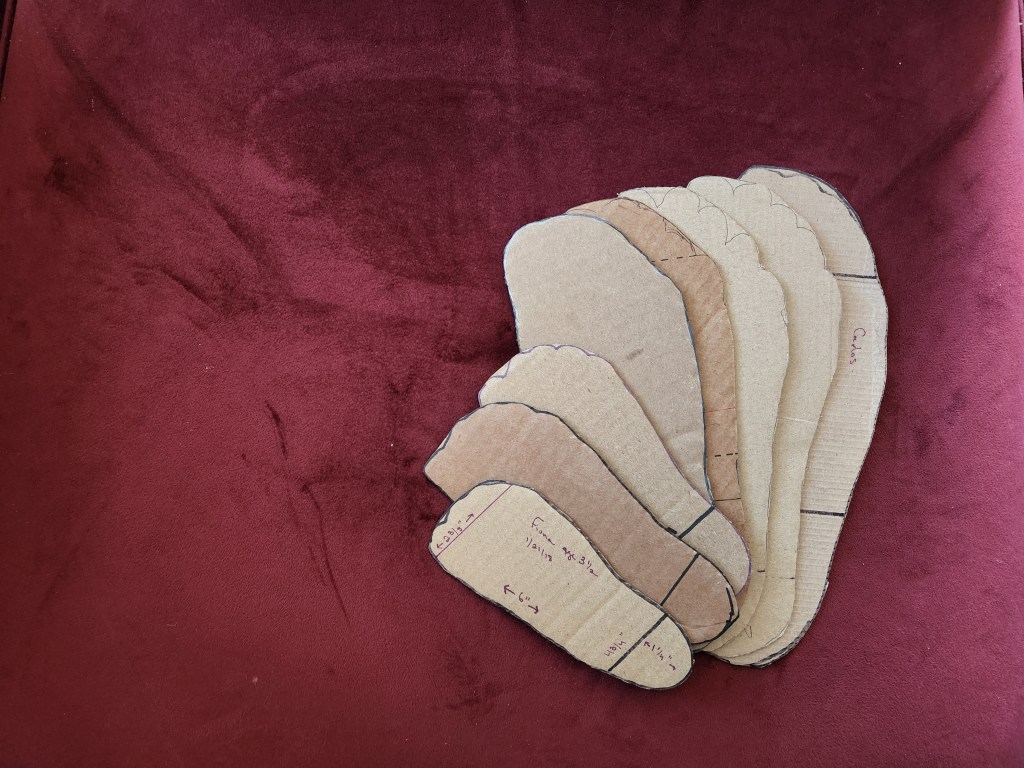
It took me a long time to figure out my formula for my perfect vanilla sock. I have tried my hardest to find the right formula for every foot that I knit for. Many parents have a wall where they measure their child’s growth, or a picture frame that shows the evolution of the child. I have cardboard cutouts of Feebs’s feet. The first one was when she was about 1 1/2 years old. Every time she has a growth spurt, a new foot is drafted. I have a foot for all of my sock-worthy people. It follows the FLK method of sock measurements, and is invaluable when the person that your are knitting for doesn’t live with you, or even near you.
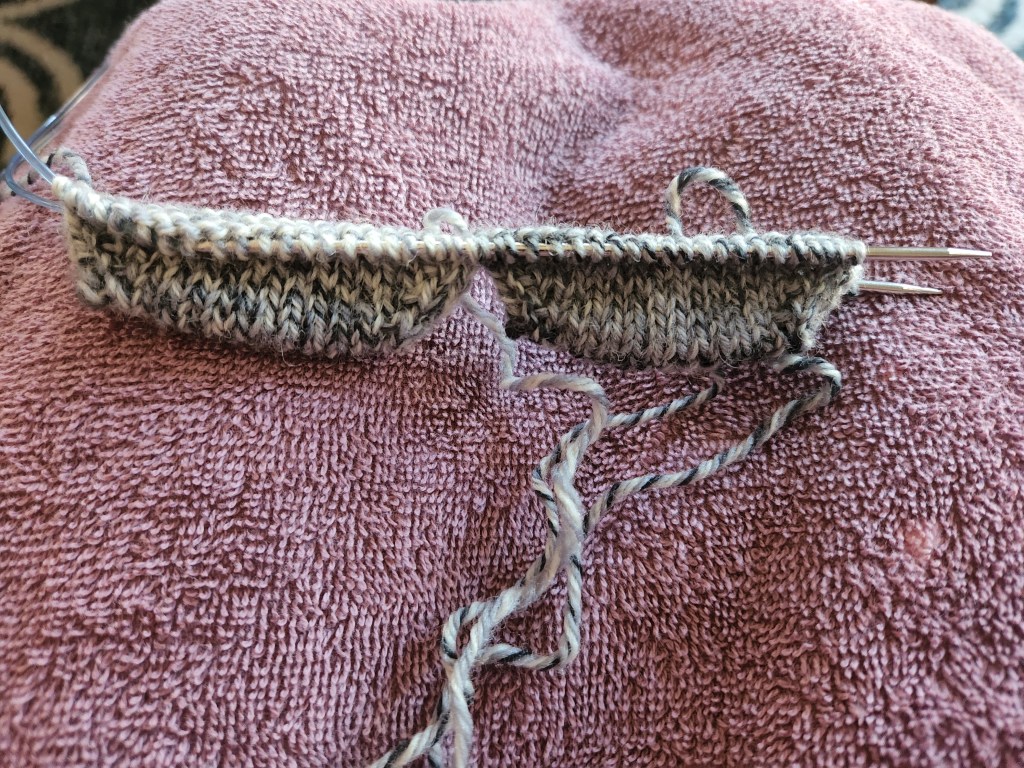
My perfect vanilla sock is toe-up, FLK heel, with a calf that is increased up to the ribbed cuff. If I am knitting daily wear socks, I always select a 75/ 25 blend yarn (my favorite, to date, is Paton Kroy sock yarn). I like that the little bit of nylon helps the socks maintain shape and allows machine washing. I also think they are more durable. I only use 100% wool, or other fiber types, when knitting house/bed socks. They won’t get as much wear and tear as daily wear socks, so they can be more precious. I use a very stretchy bind off (Jenny’s Incredibly Stretchy Bind-off) so that I can pull them on and off with ease. I knit my socks in stockinette for a smooth and comfortable fabric. I like my socks snug and dense, so I knit a 58 stitch sock on the foot and increase the calf to 64 stitches. I always use 1.25 mm needles, even if I am using a thicker weight yarn. I like the dense fabric that using the smaller needles creates. I tend to cast on the socks using the magic loop, 2 at a time method. I always like to knit pairs of anything at the same time. I do this with sleeves and fronts and backs of sweaters. My theory is that if I am having a rough day or a brain-fart, my pairs will have the same mistake, the same gauge, the same issue on both pieces. Then it is more of a feature and less of a mistake. This has always worked out well for me. I measure the feet to know when to start my heels. Once the foot and the heel are completed, I separate the socks and work the calf, one at a time, using a 9 inch circular needle. Once I am working independently, I no longer measure. On the first sock, I wing it. I have a general idea of when to start increasing and I put them in every inch or so. I knit a 1×1 rib cuff for 10-12 rows, then bind off. On the second sock, I use the first sock as a guide and instead of measuring, I count rows. My knitting stays pretty consistent, so I am able to get away with this. I am also not horribly concerned about my pairs being sisters versus twins. It doesn’t bother me if they don’t match 100%. Once you put them on your feet a lot of the “errors” disappear.
So, my bottom line is that handknit socks are amazing. They are fun to knit, very portable, and fabulous to wear. I have even begun teaching Ms. H how to find her vanilla sock formula and how to knit them. With some minor help, she has knit her first pair. I love fingering weight all the way to bulky weight socks. Daily wear socks, and bed socks. My PSA for the day: Handknit socks- get on that train!
Loves,
M
 Mrs. Collins Makes Stuff